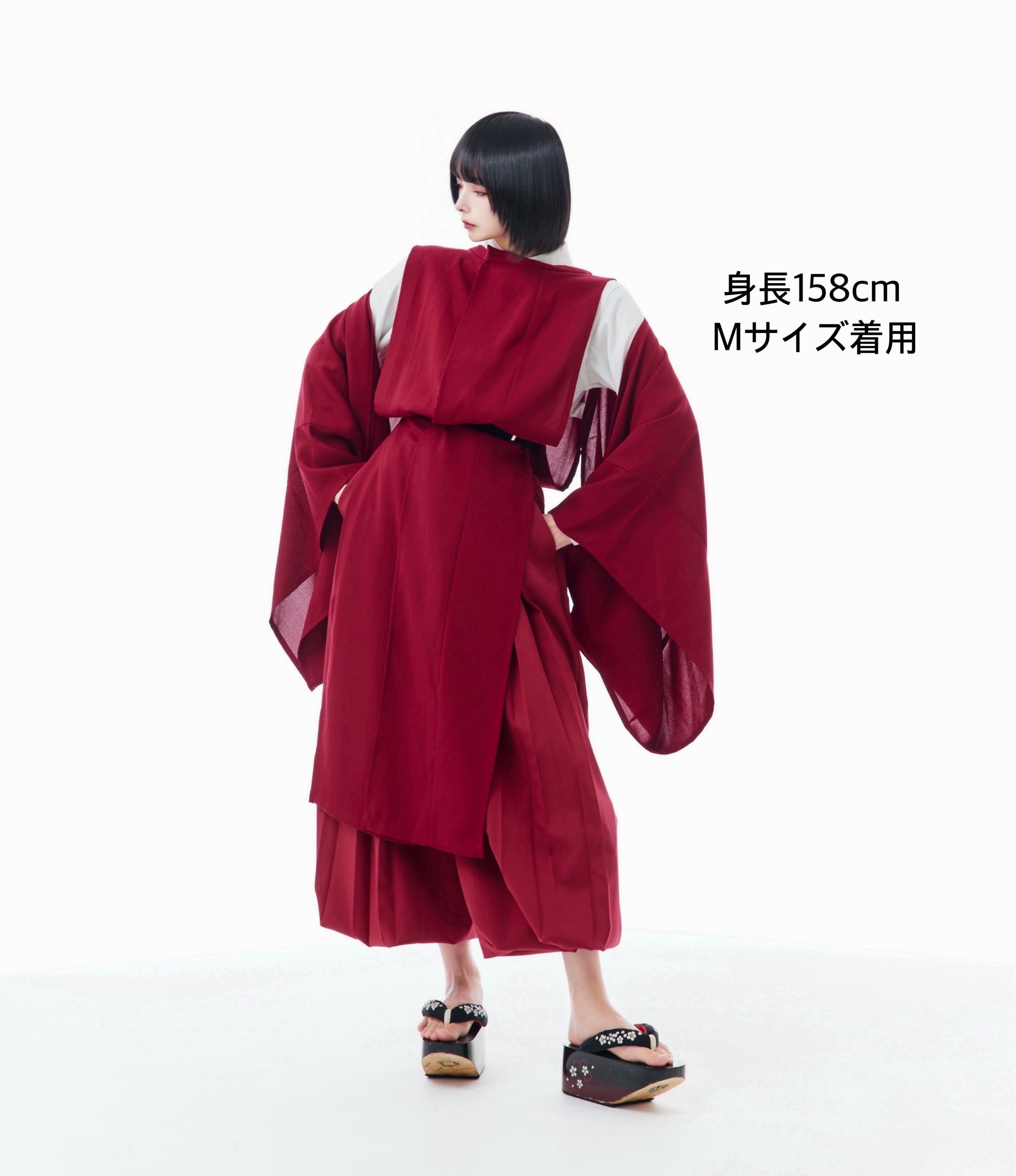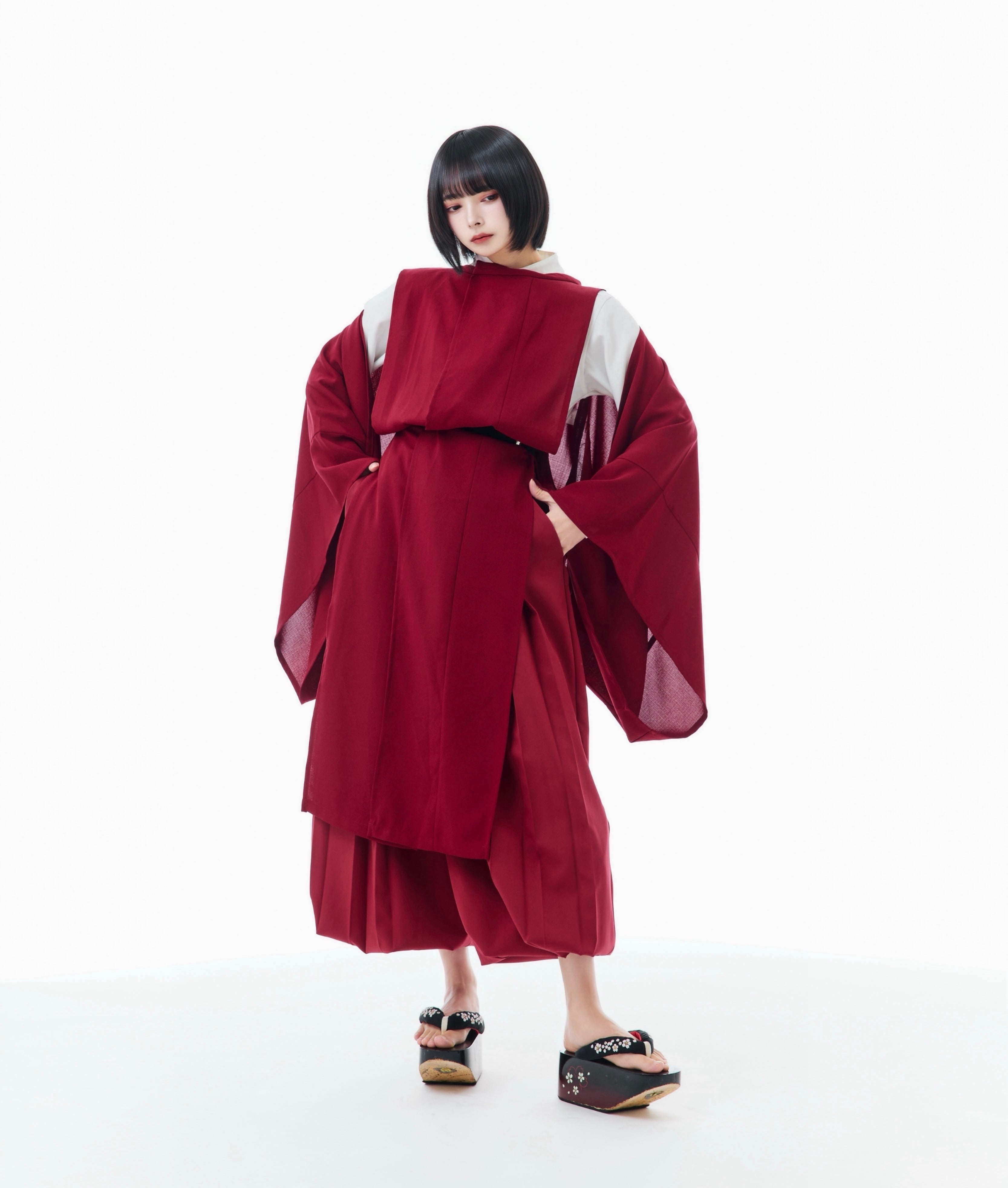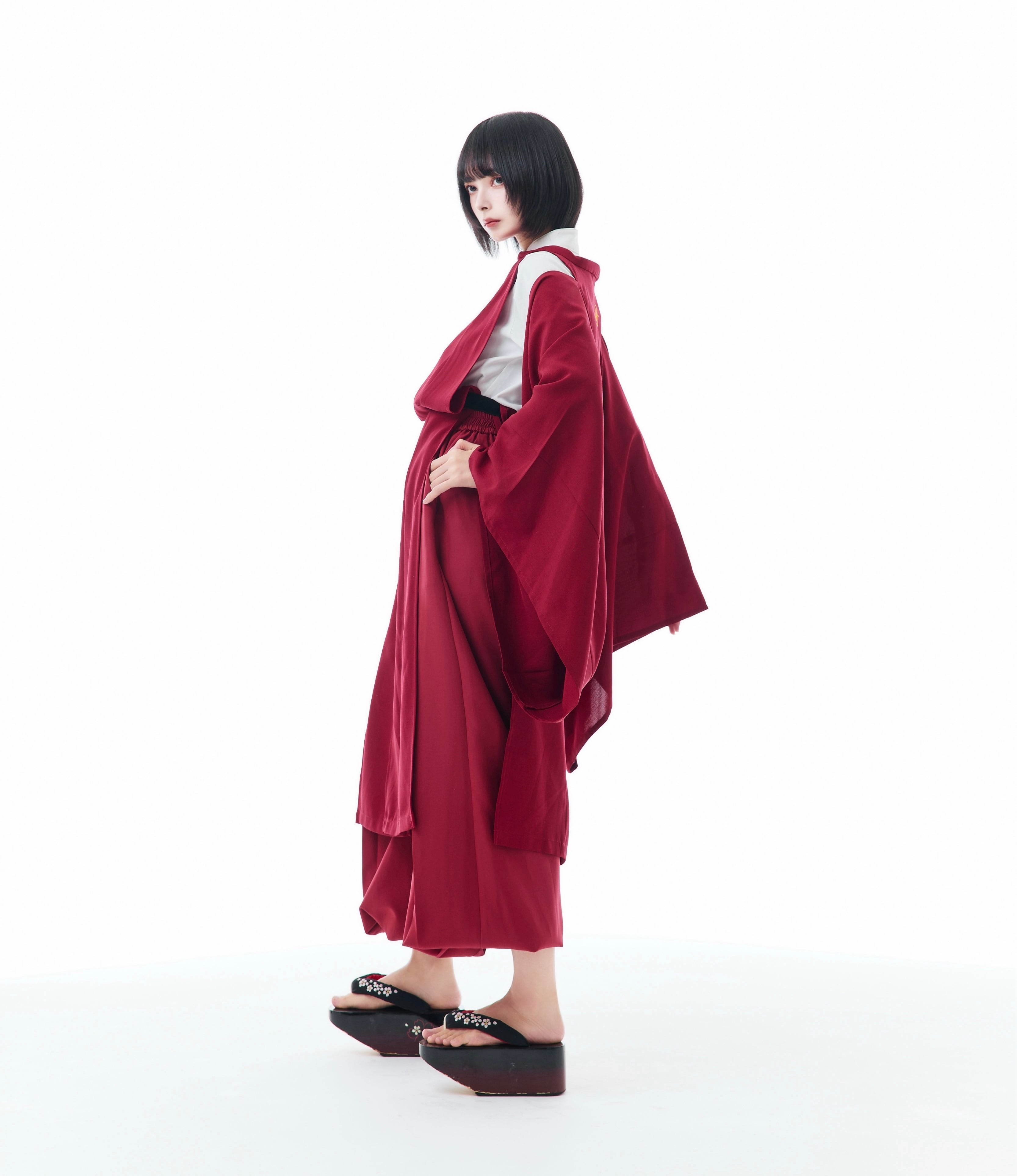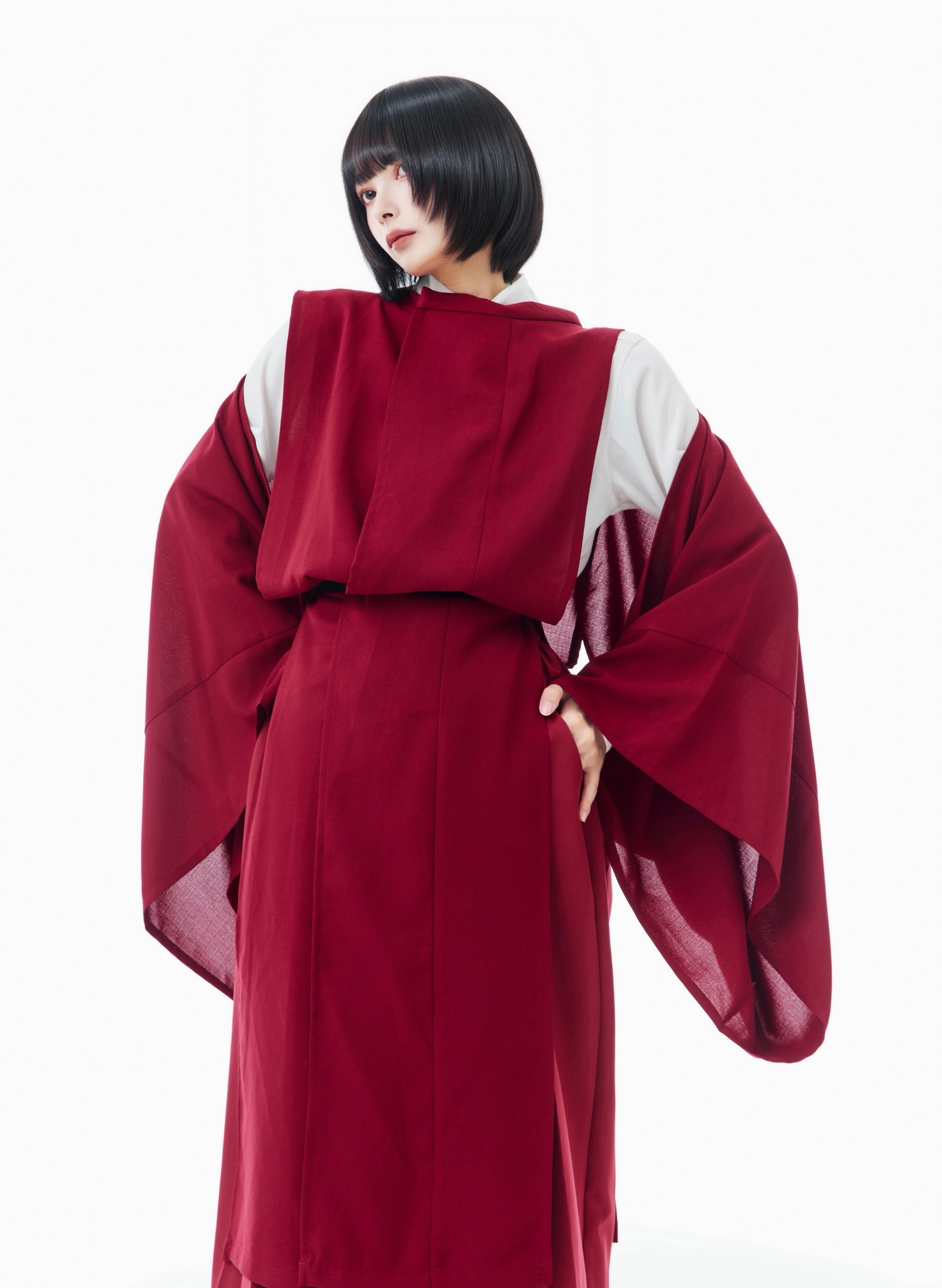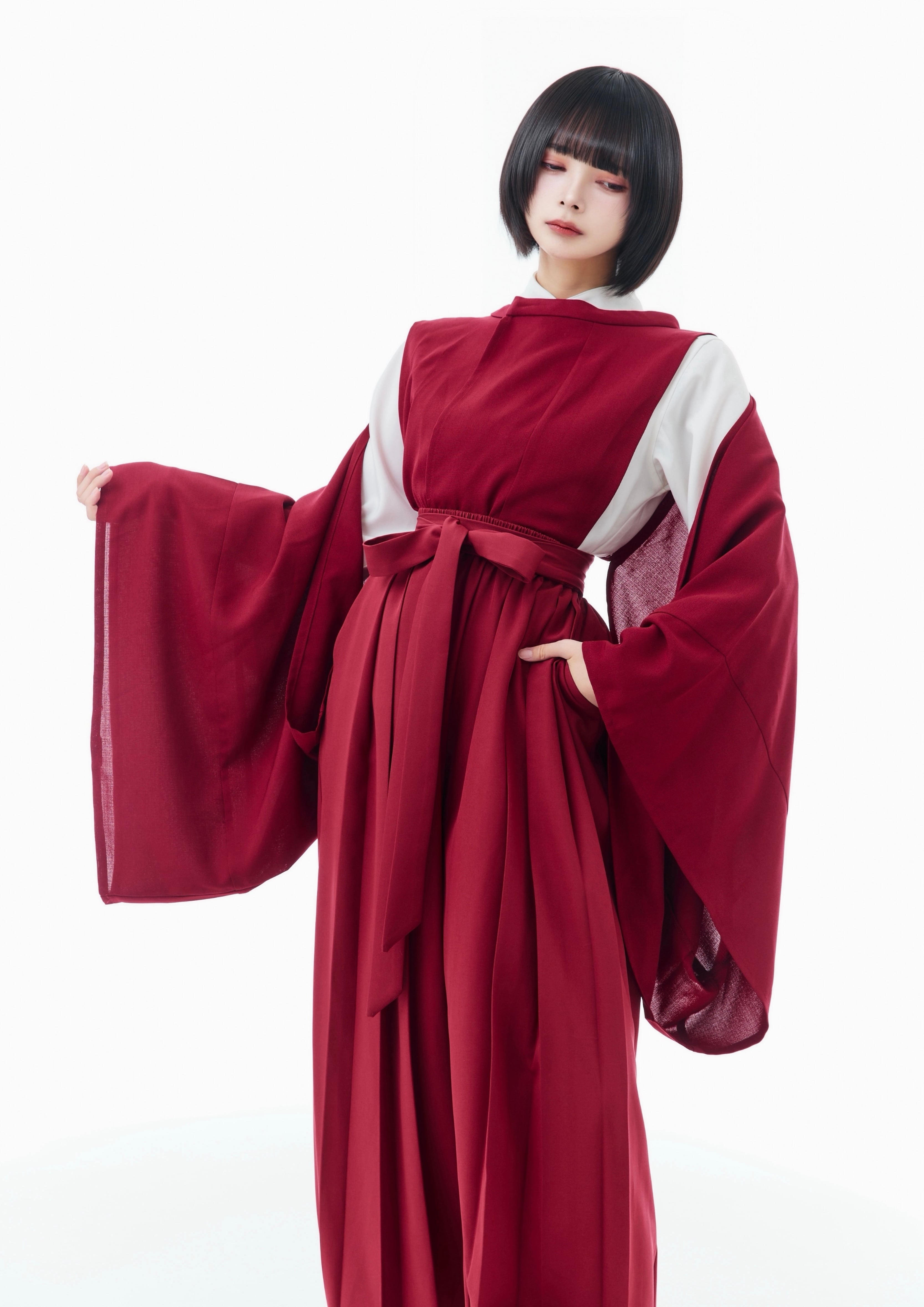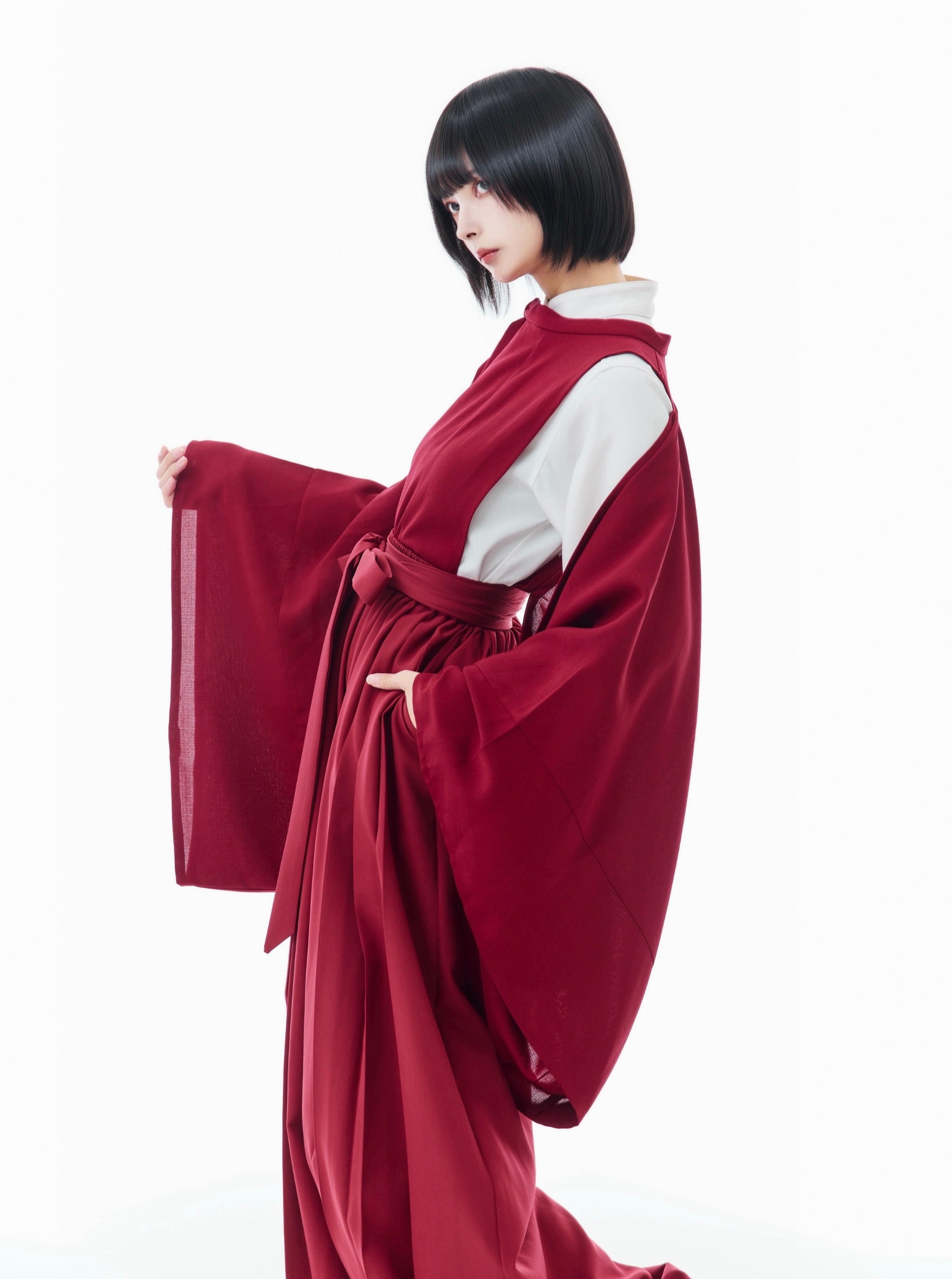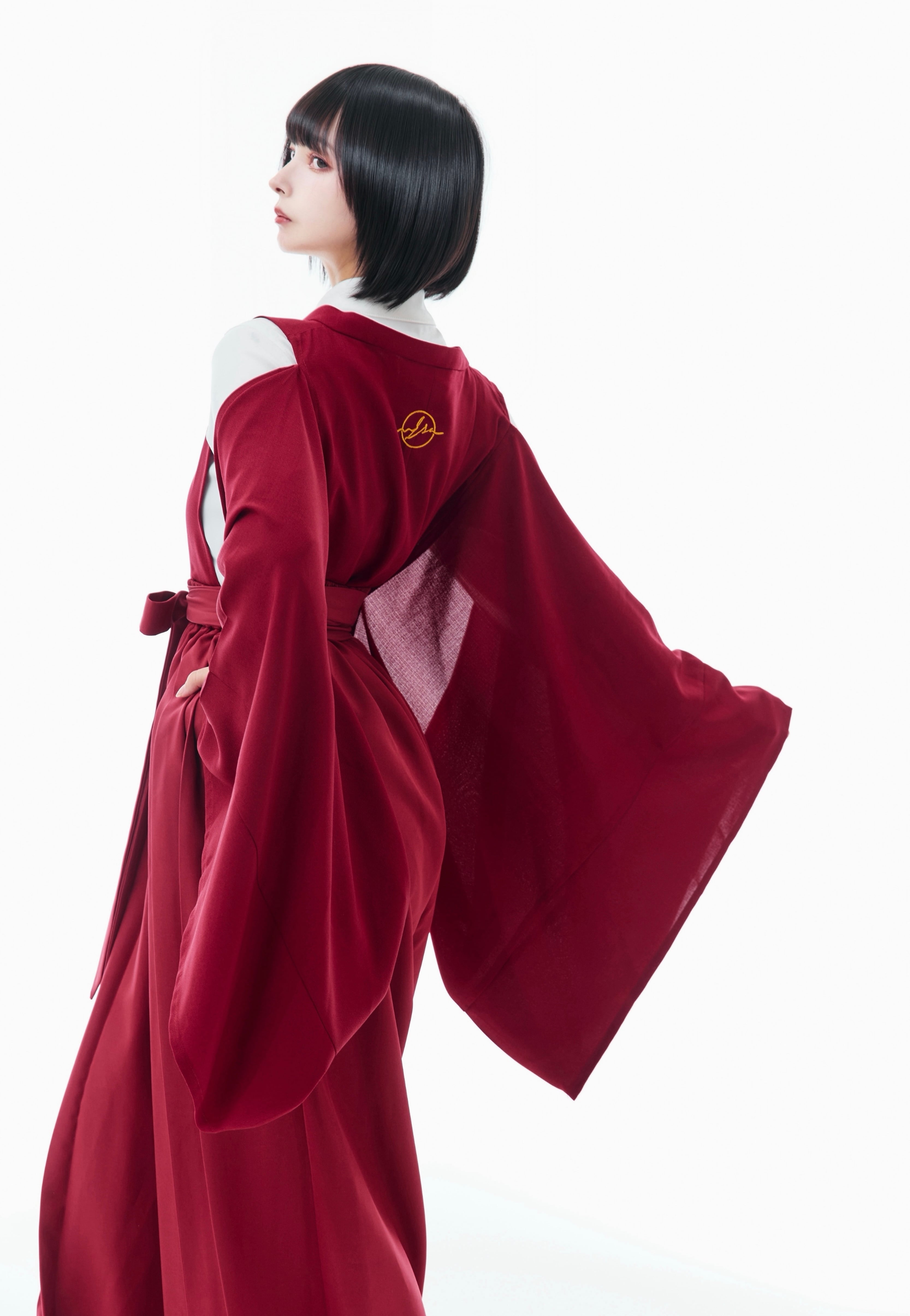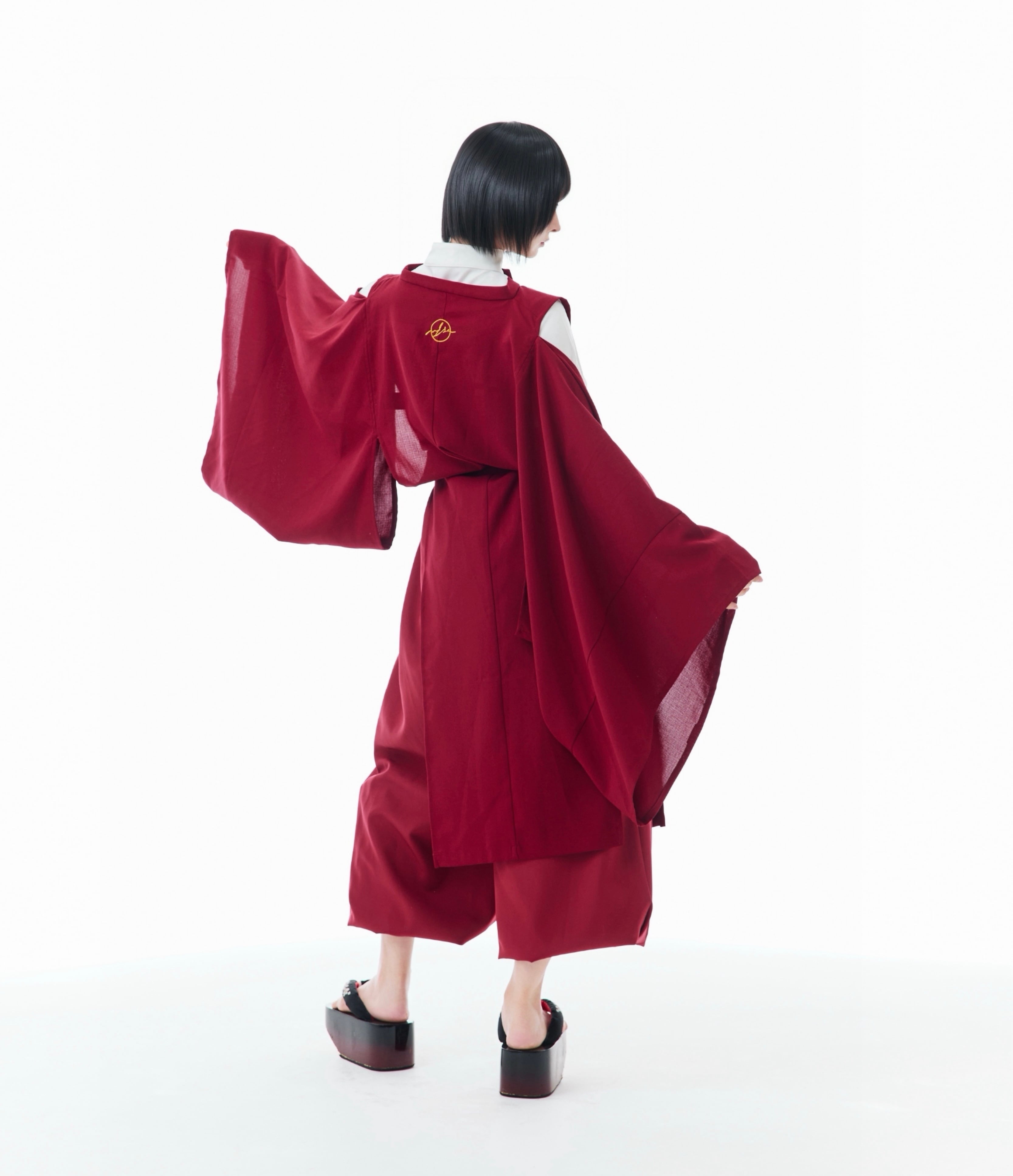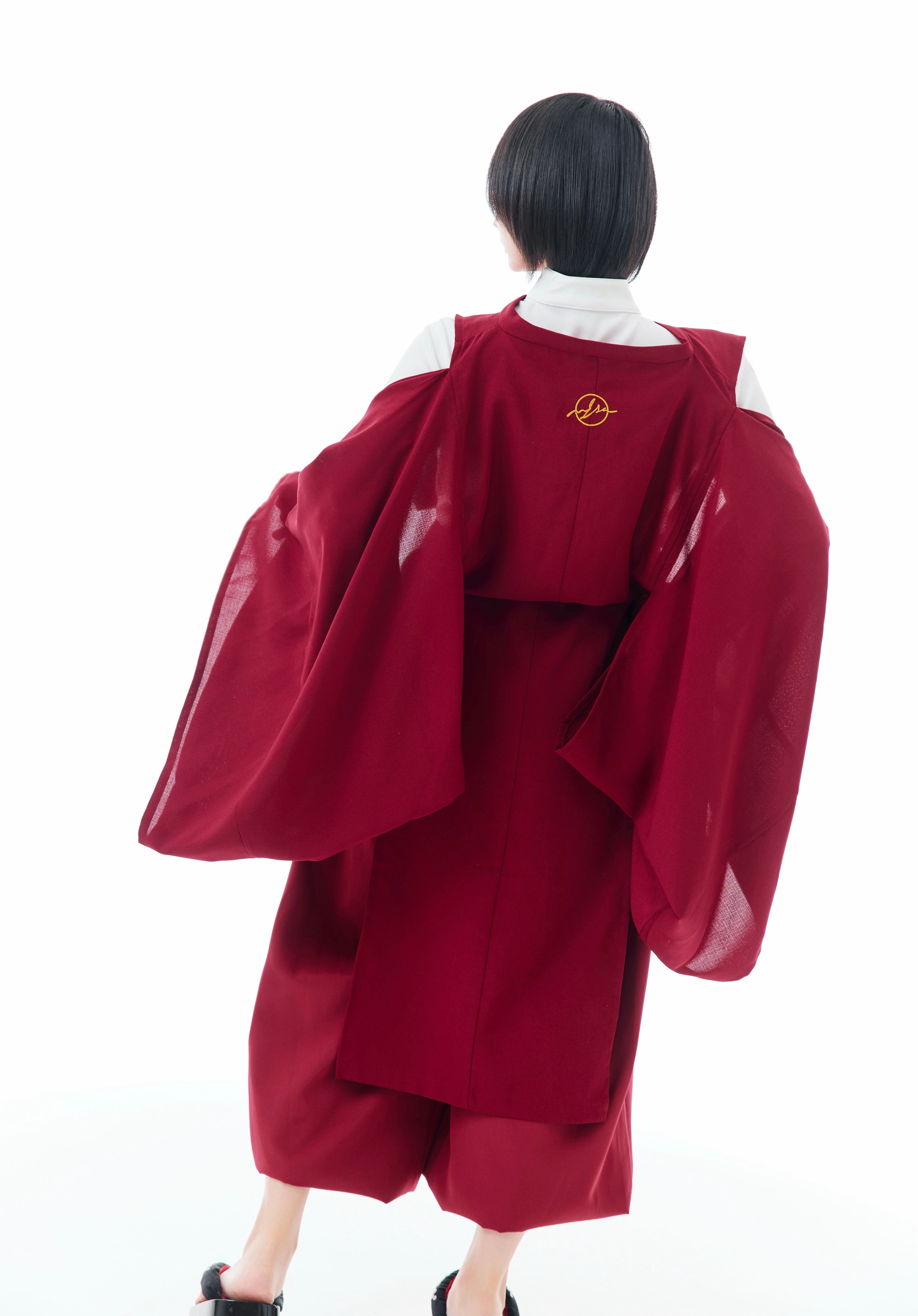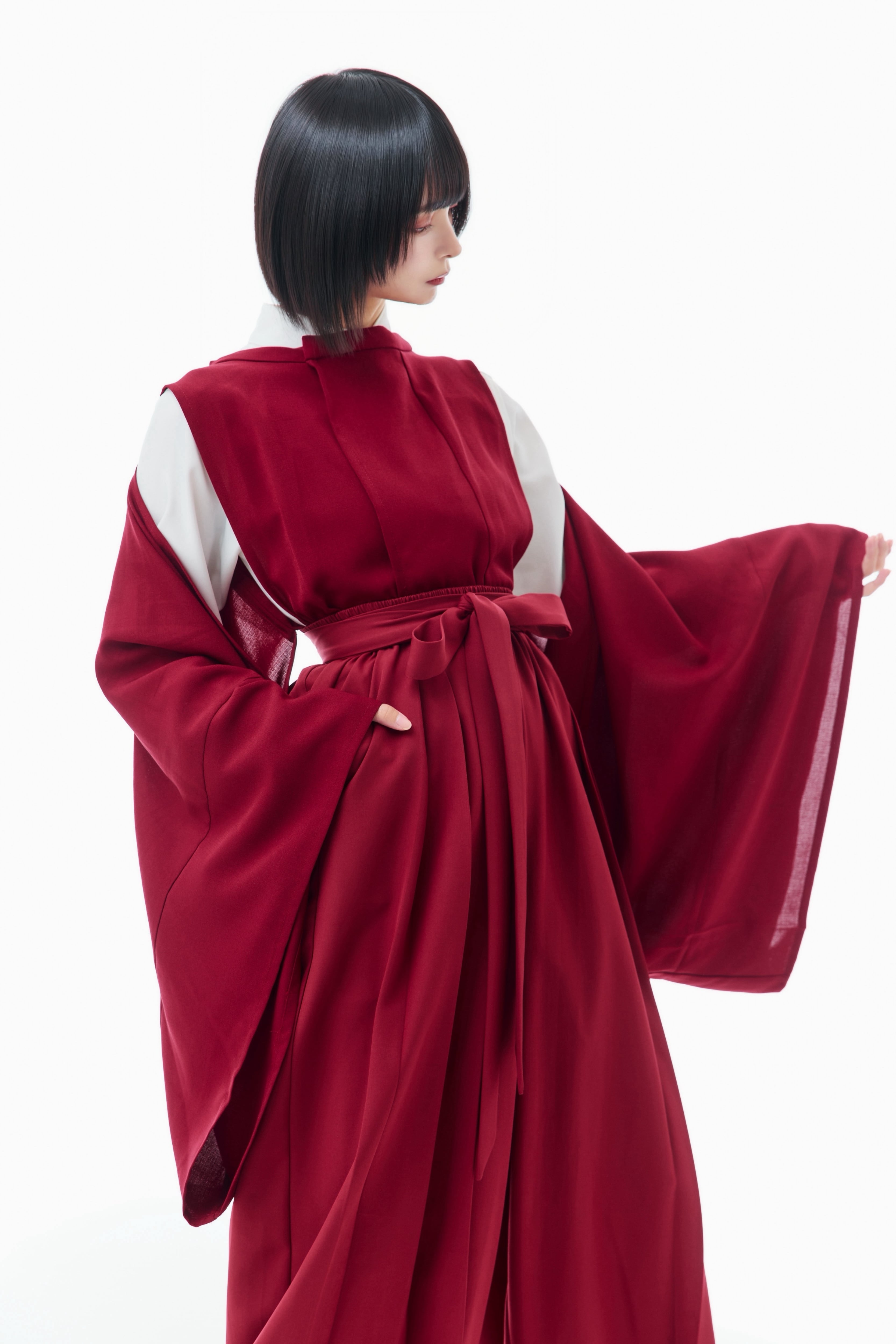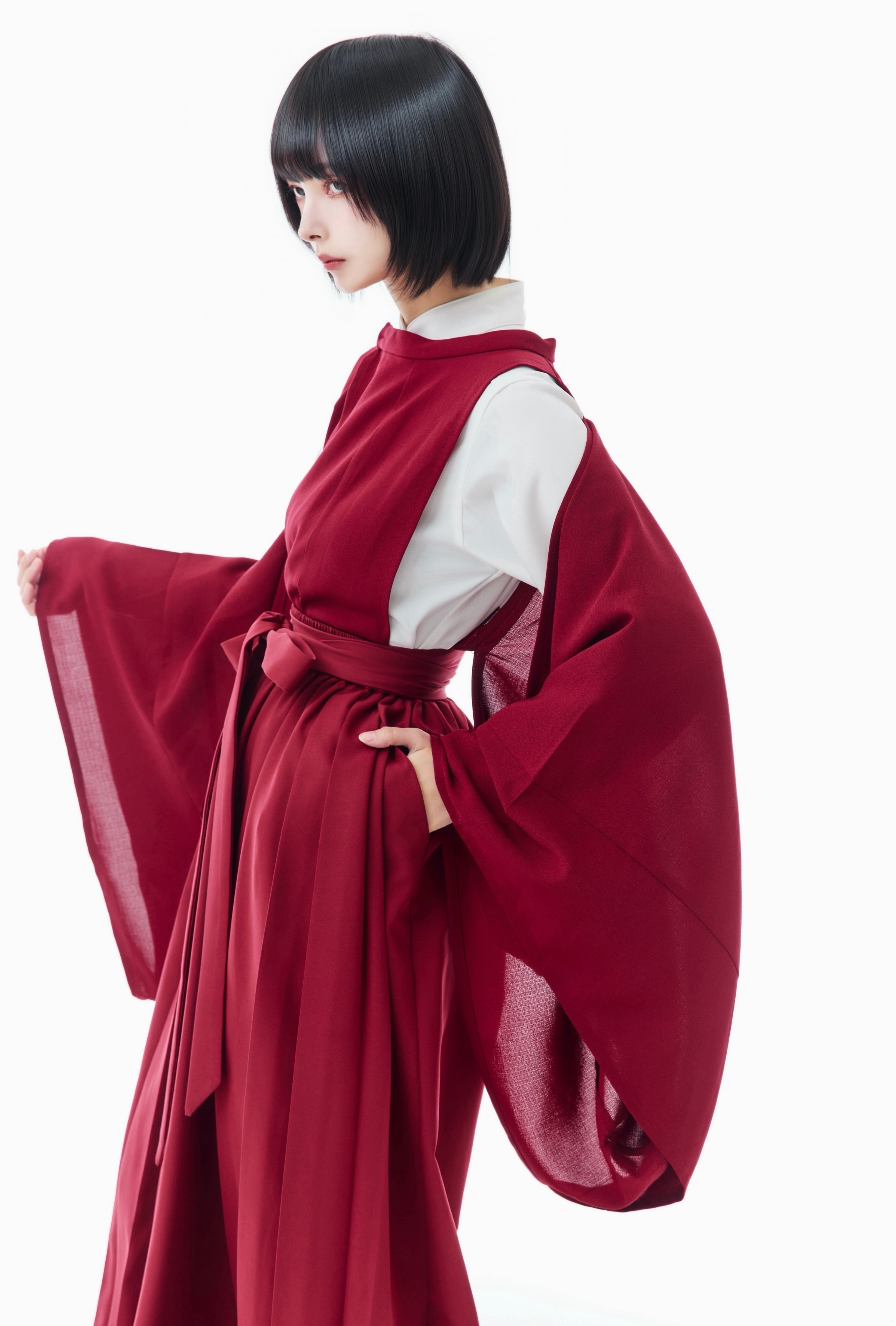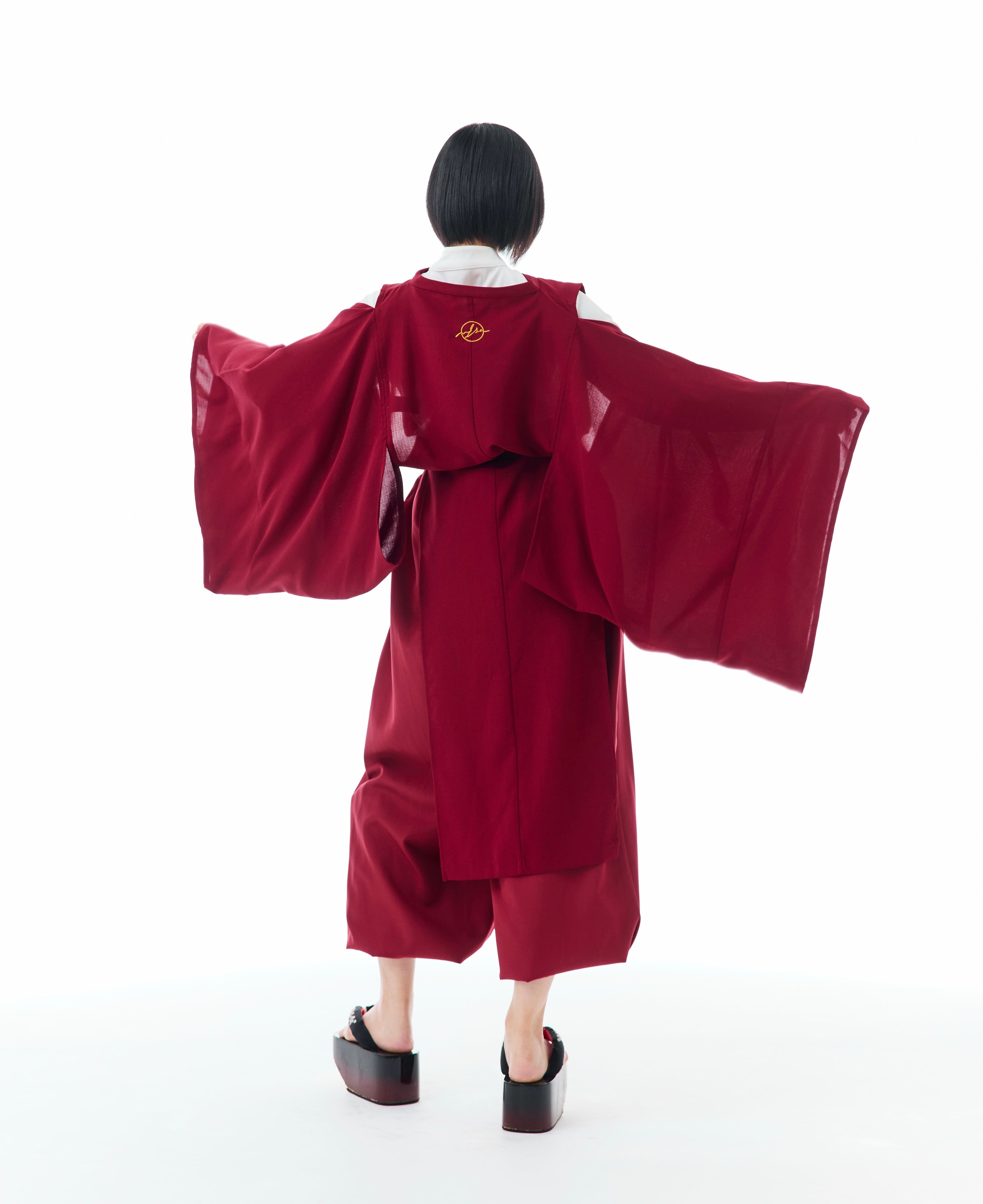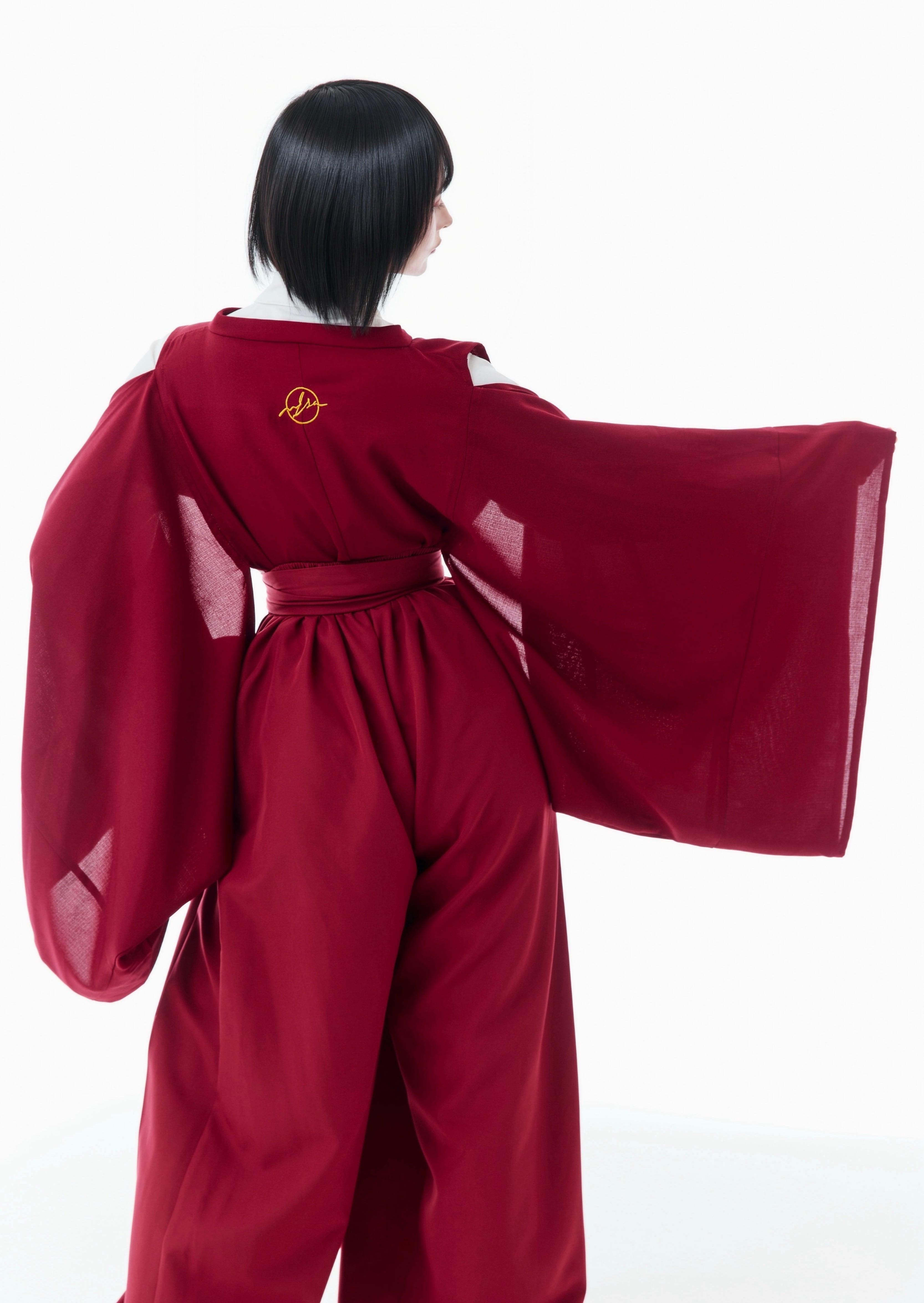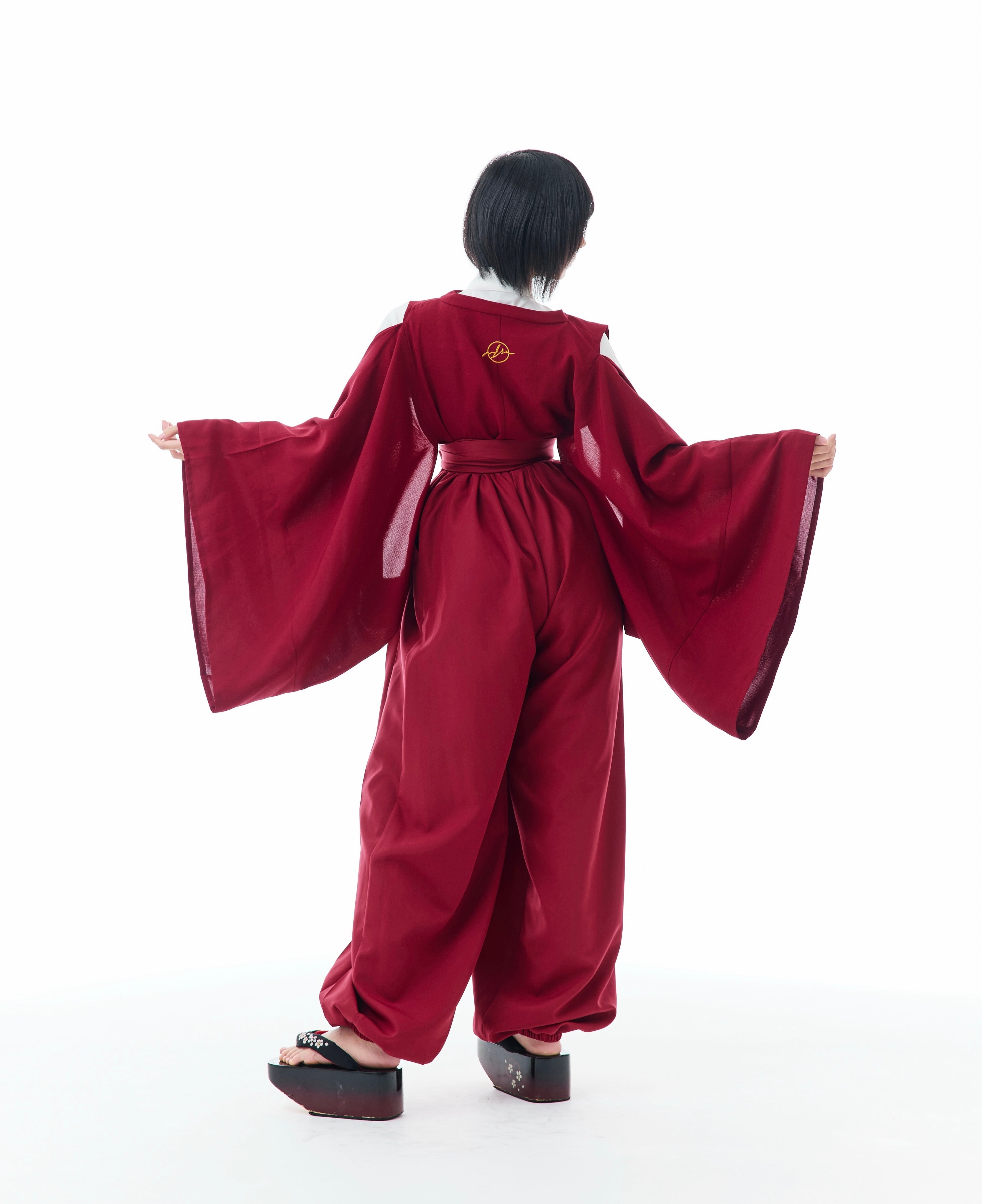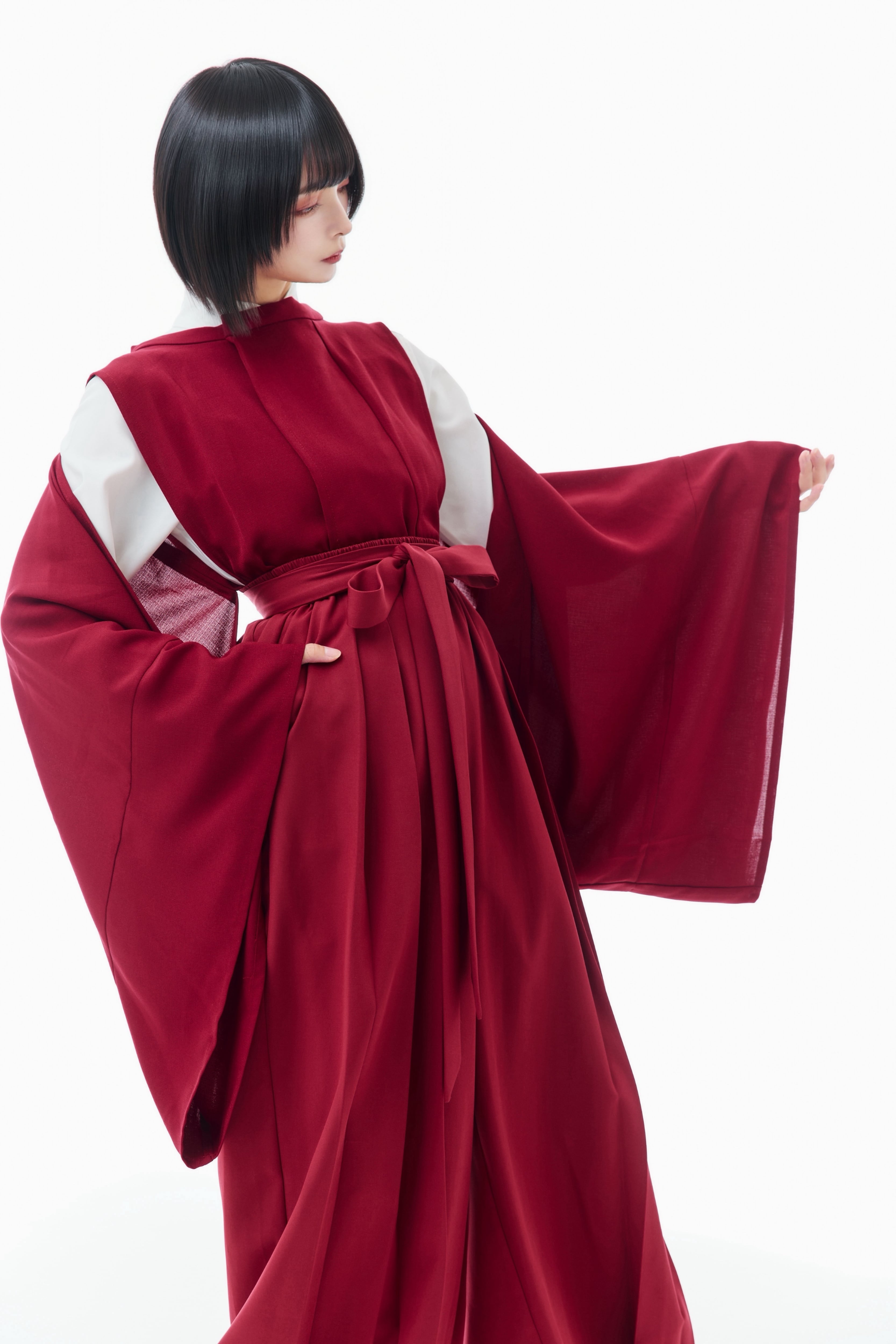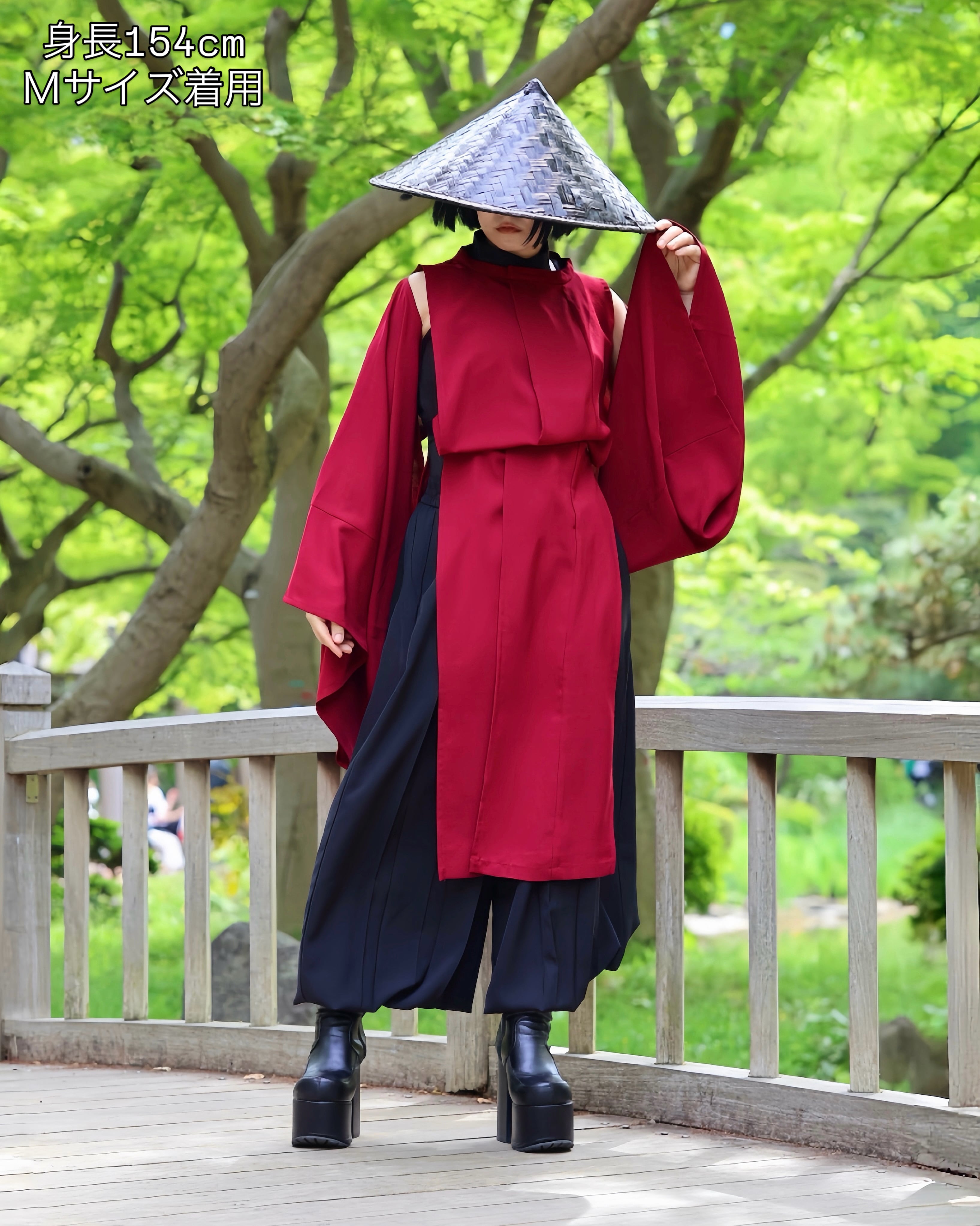








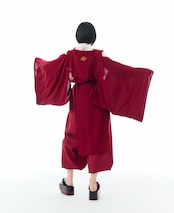


夏の平安モードロング ワインレッド
¥12,500($79.49)
International shipping available
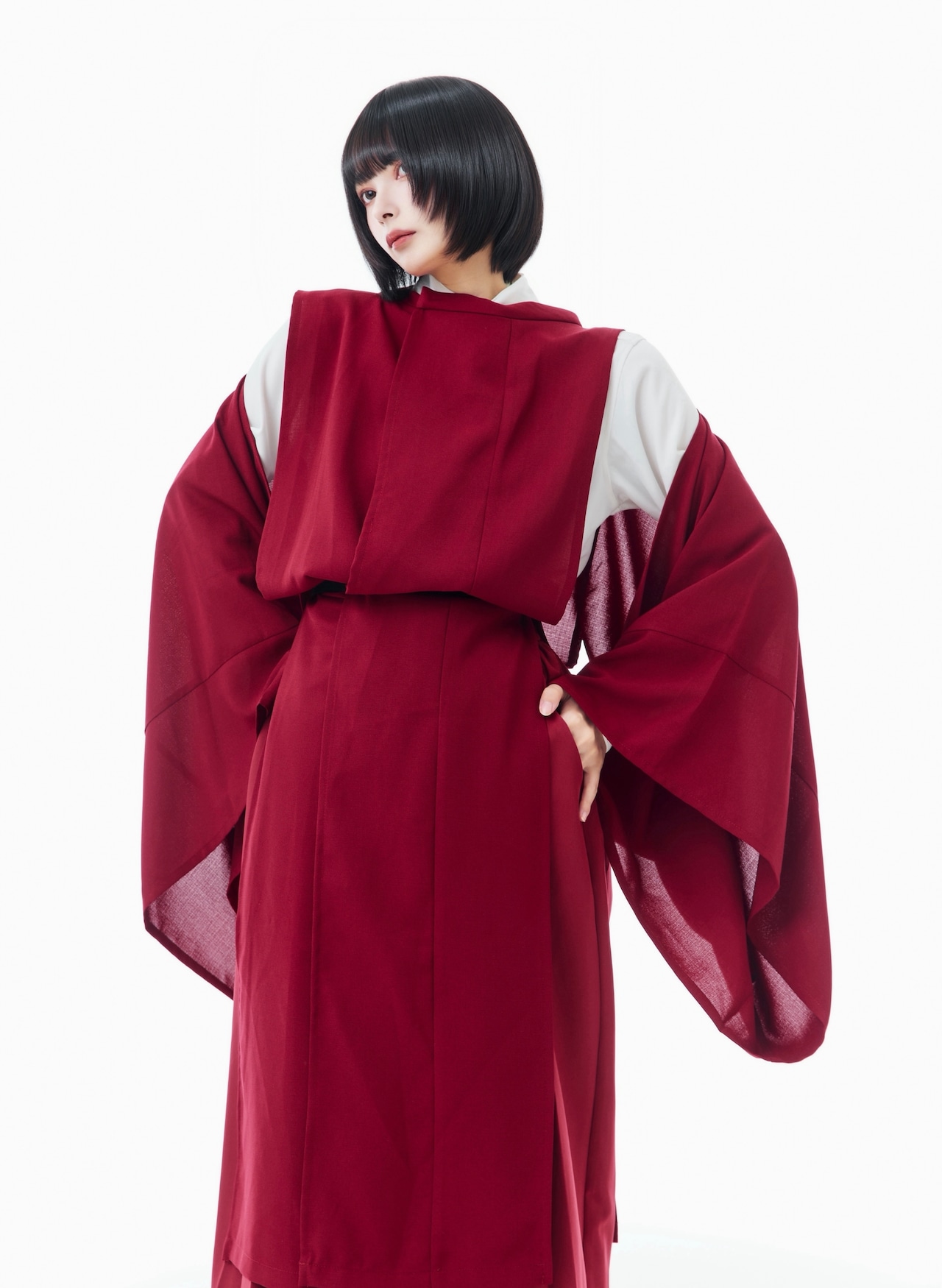
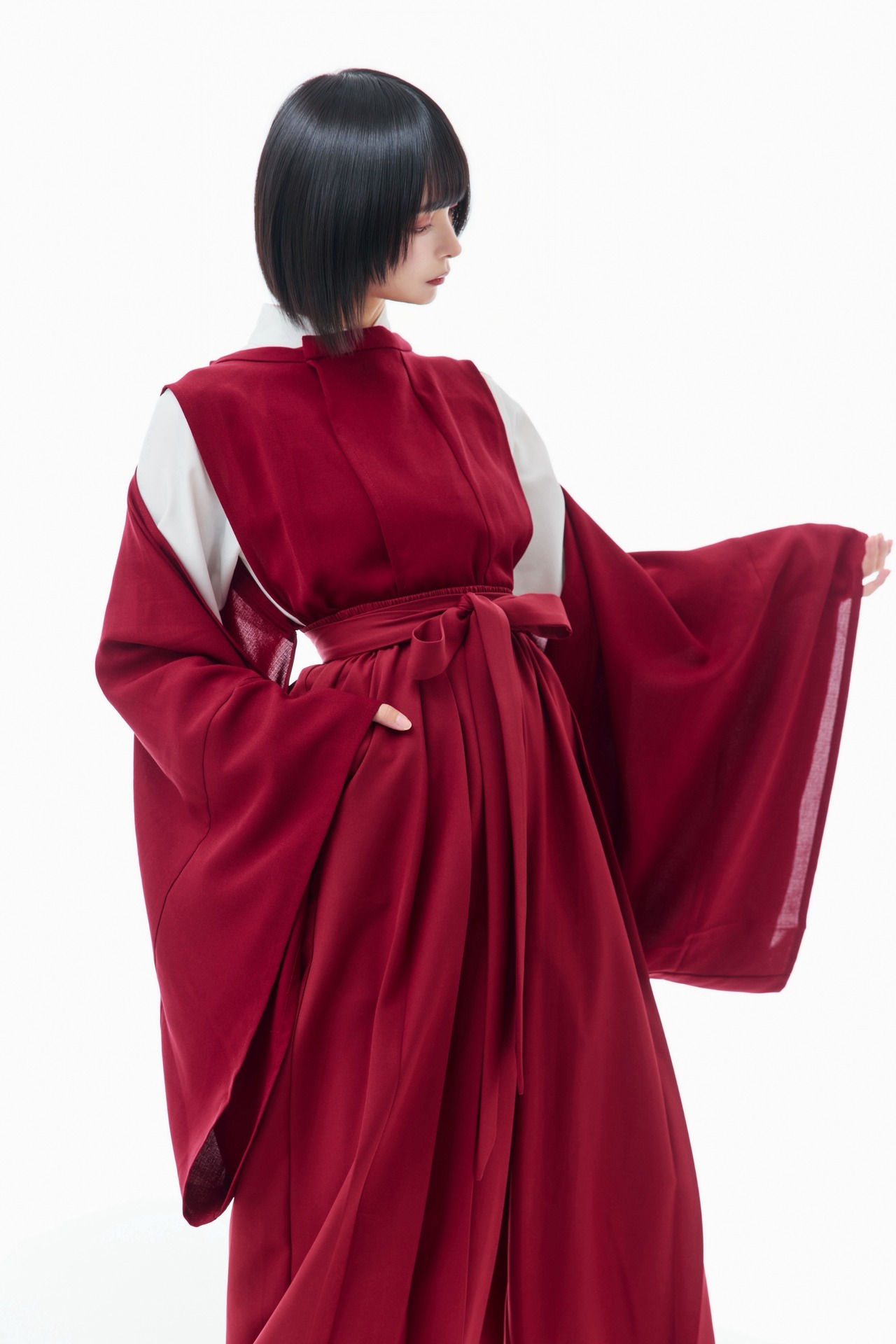
人気の「平安モード」より、涼しい夏素材のロング丈バージョンが登場!
接触冷感素材を採用し、快適な着心地を実現。
■平安モード■
狩衣・水干を現代風にアレンジした新感覚和装。
平安時代の衣装である狩衣・水干を現代風に再解釈し、洗練されたモードなデザインとして仕上げた「平安モード」。伝統的な美しさを残しつつ、現代のライフスタイルにぴったりなアイテムとして新登場。
■デザインの特徴■
狩衣や水干は元々貴族だけではなく庶民の日常着として親しまれていた装い。それをシンプルでモダンなラインにアレンジし、和装初心者から上級者まで気軽に楽しめるデザインに仕上げました。
■2WAYスタイル■
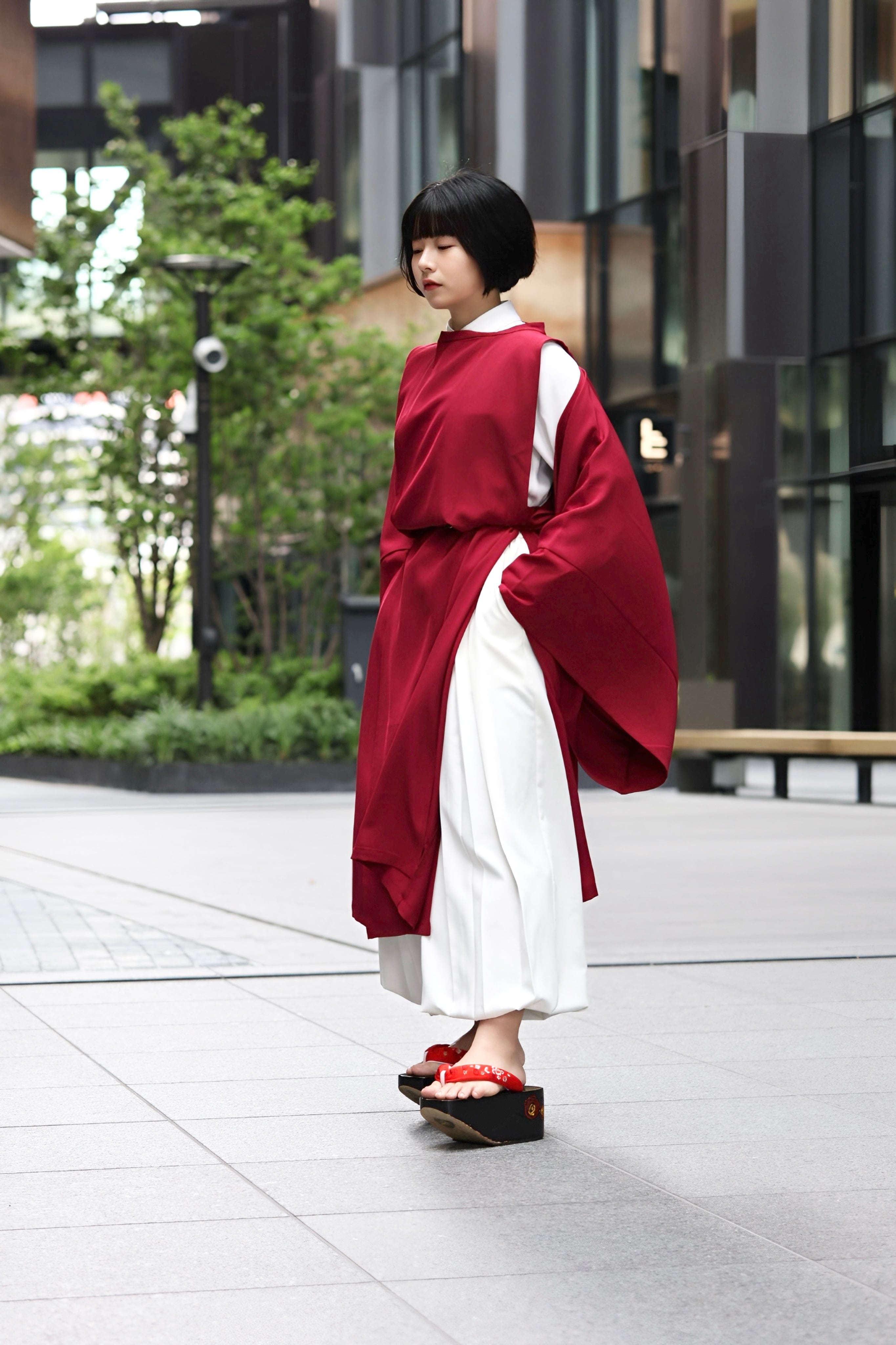
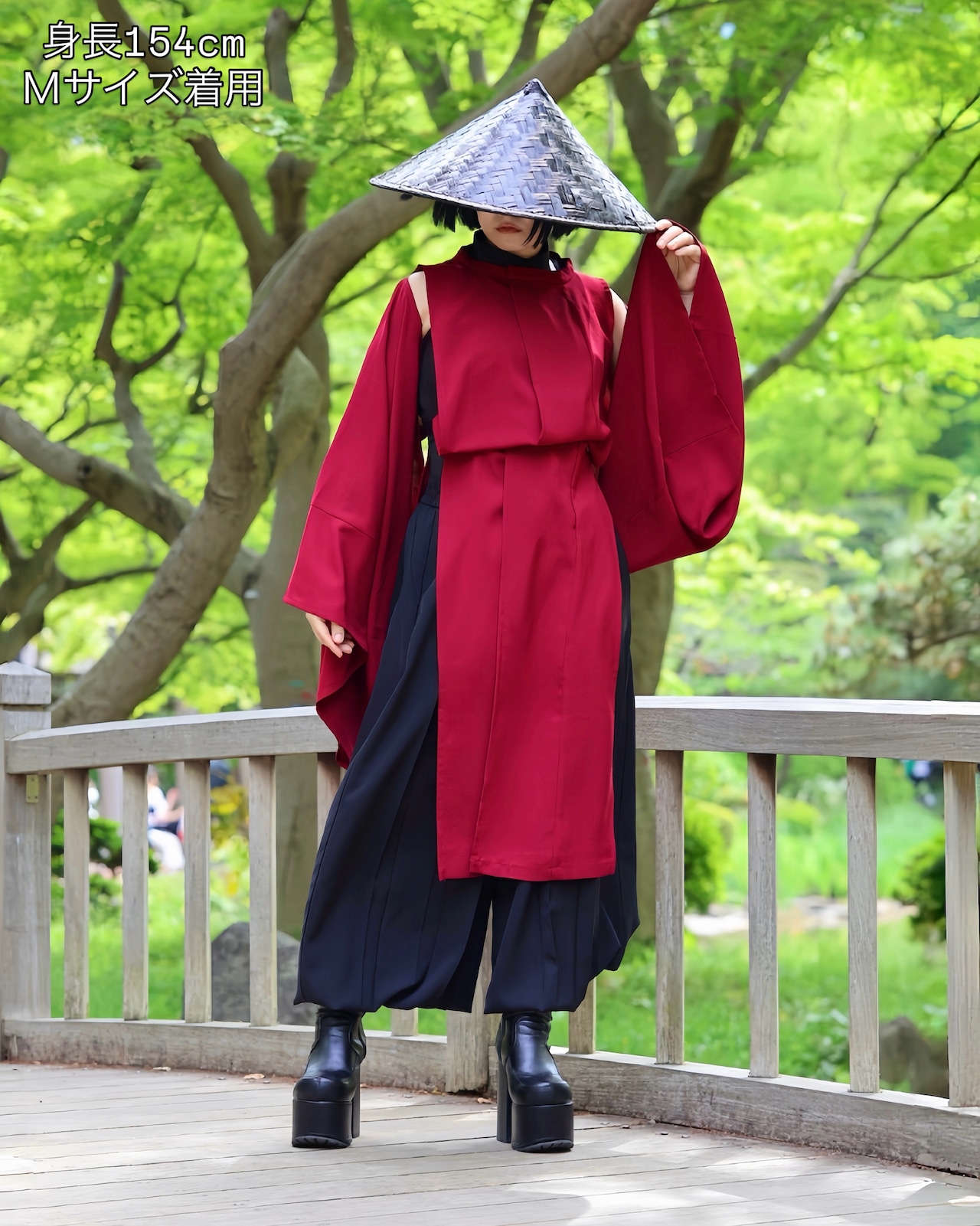
ボトムスにインすれば水干風の端正な装い、アウトすれば狩衣風のゆったりとした雰囲気を楽しめます。
■自由なコーディネート■
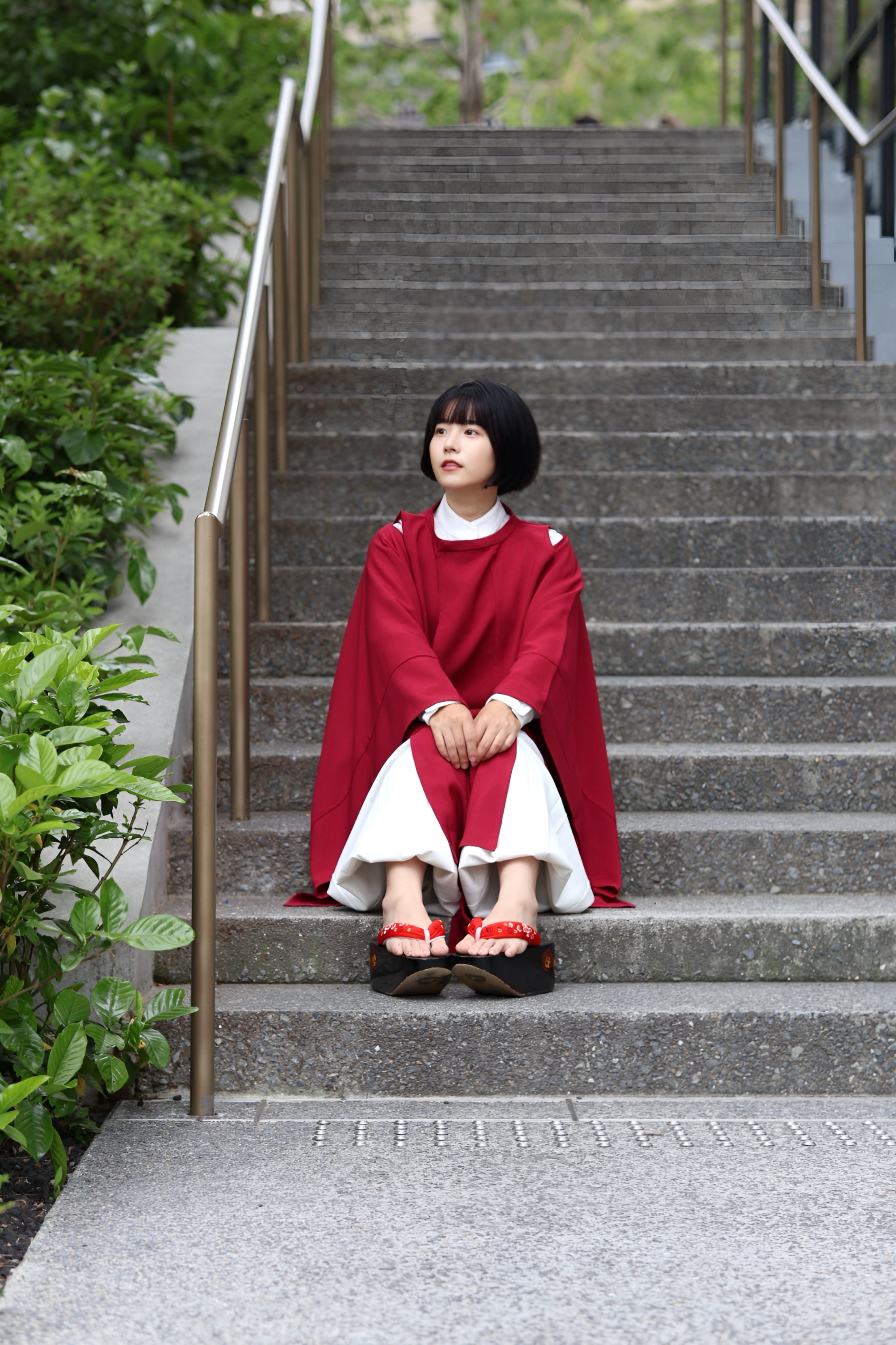
袴パンツに下駄を合わせれば古典的な着こなしに。ベルトやパンツ、スカートと組み合わせれば現代的でスタイリッシュなコーディネートも可能です。
■ディテールへのこだわり■
・美しいシルエットを意識したサイズ設計
レディースサイズは肩幅をややコンパクトにすることで、華奢なシルエットを演出。一方、メンズサイズはゆったりとしたラインでリラックス感のある着心地を実現しました。
・素材と仕立てへのこだわり
肩〜脚元、袖のふらしは古典的な狩衣を再現。
素材は軽やかで肌触りの良い生地を使用し、現代の生活や洗練されたファッションシーンに馴染む仕上がりに。寸法は0.5cm単位で計算し、細部まで妥協のないフィット感を実現しています。
■お手入れも簡単■
汗をかいても自宅の洗濯機で気軽に洗えるので、お手入れの負担も最小限。一般的なハンガーで干すだけでOK。忙しい日常でもいつでも清潔に保てます。
■こんなシーンで活躍します■
・日常のカジュアルスタイルに和のエッセンスを加えたいとき
・特別なイベントや推し活、和装イベントで周りと差をつけたいとき
伝統を感じさせながらも、自由自在な着こなしで個性を表現できる「平安モード」。シンプルでいて多機能、そしておしゃれ。あなただけのコーディネートをぜひお楽しみください。
▼カラー
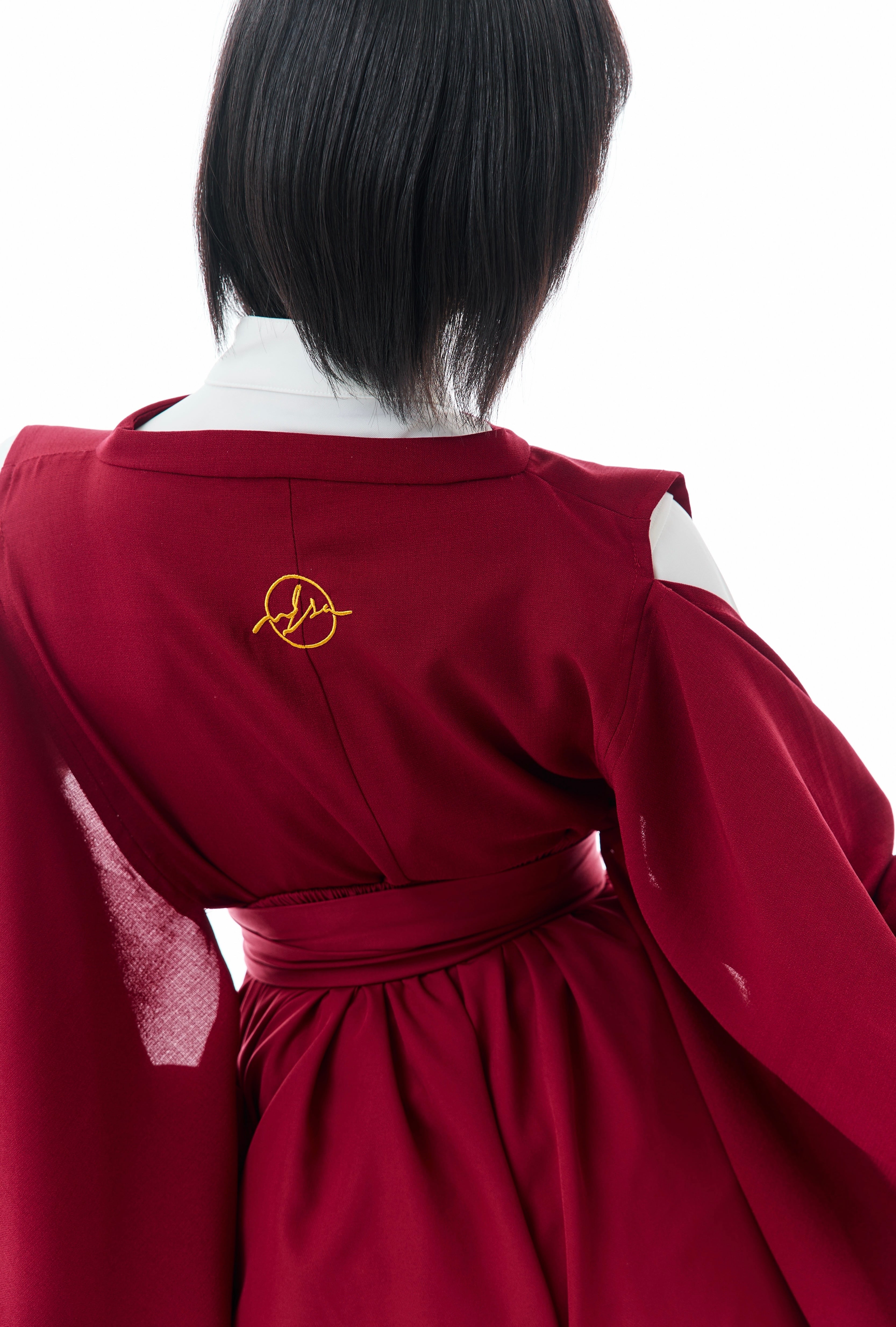
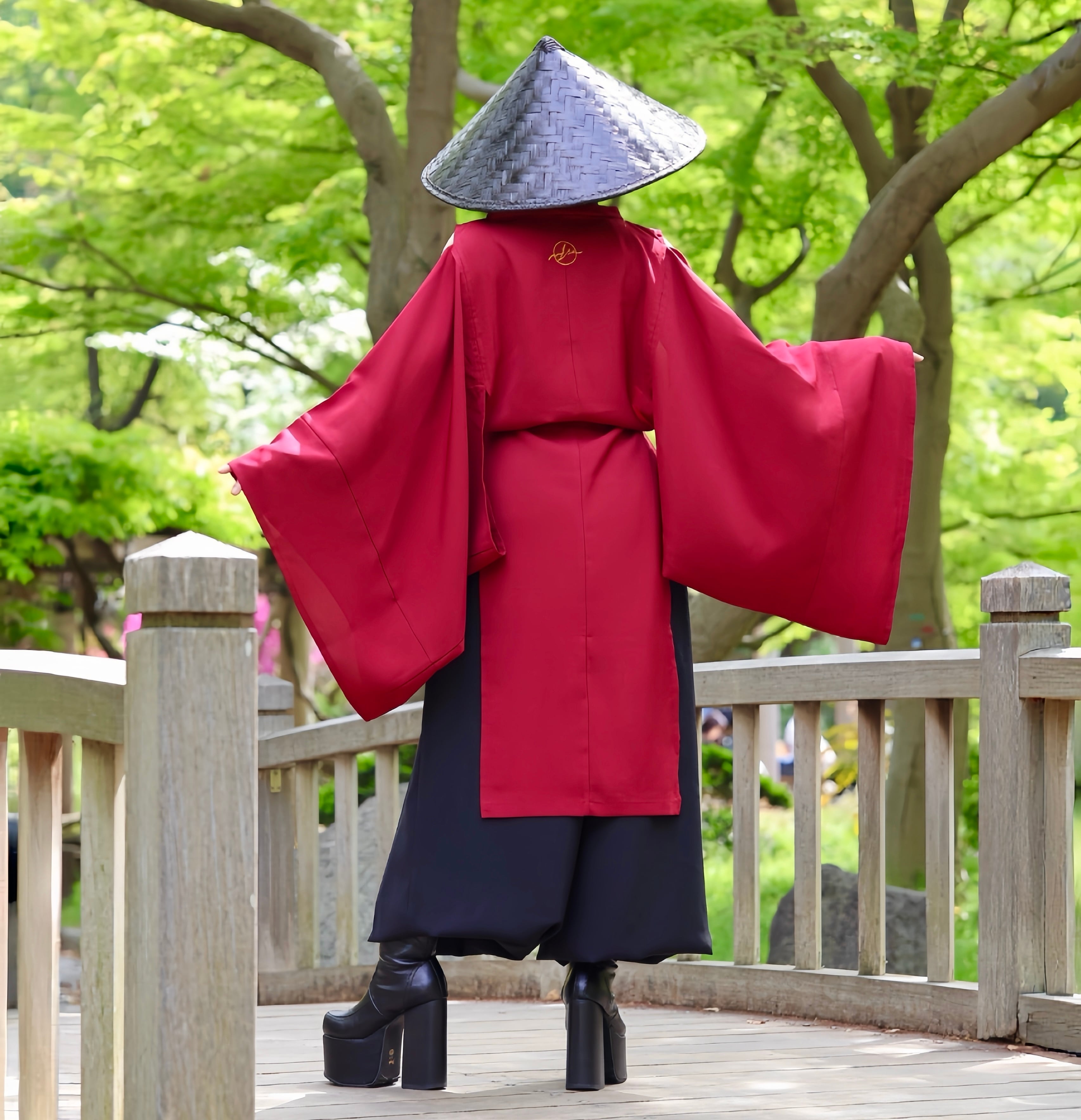
ワインレッド(金刺繍の背紋付)
▼サイズ
Mサイズ
身丈:120cm
身幅:48cm
袖丈:53.5cm
袖幅:53cm
肩幅:35cm
Lサイズ
身丈:123cm
身幅:50cm
袖丈:54.5cm
袖幅:55cm
肩幅:37cm
▼素材
ポリエステル100%
▼お手入れ
ネットに入れて洗濯機で洗えます。
着物ハンガーではなく家庭にある一般的なハンガーで干してOK。型崩れせずシワにもなりにくい素材です。
※他の衣類に色が移る可能性があるため、単体で洗濯することを強く推奨します。
▼紋について
MISAMARUの紋は、私紋や洒落紋としての個性豊かな表現を大切にしています。
背中に刺繍された紋には、着物が持つ可能性をさらに広げたいという強い想いが込められています。
MISAMARUの紋をまとうことで、着る人それぞれの個性が際立ち、大切にされるよう願っています。
▼生産国
CHINA
▼参考文献
井筒雅風(1982)『原色日本服飾史』,光琳社。
井筒雅風(2015a)『日本服飾史 女性編』,光村推古書院。
井筒雅風(2015b)『日本服飾史 男性編』,光村推古書院。
切畑健(2003)『日本の女性風俗史』,紫紅社文庫。
公益社団法人京都染織文化協会(2021)『再現 女性の服装1500年-京都の染織技術の絆-』,公益社団法人京都染織文化協会。
髙島克子(2024)『イラストでみる平安ファッションの世界 皇族・貴族から武士・庶民まで』,有隣堂。
髙田倭男(2005)『服装の歴史』,中央公論新社。
多賀譲治(2011)『知るほど楽しい鎌倉時代』,理工図書。
八條忠基(2021)『日本の装束 解剖図鑑』,エクスナレッジ。
樋口隆晴(2021)『イラストでわかる武士の装束 サムライファッション』,玄光社。
永井幾麻(1936頃)『狩衣水干等着用図』(藤原時代風俗画のうち)
常盤源氏光長(作成年不明)『伴大納言絵巻』
▼本製品開発にあたり取材にご協力いただいた皆様
服飾デザイナー 髙島克子 様
寺岡伸弥 様
福井八幡神社神主 かいり 様(X:jinja_no_musuko)
※お名前掲載許可をいただいた方のみ記載
▼その他参考として
風俗博物館
A popular “Heian Mode” piece now comes in a long length version using cool summer fabric!
I use a contact cooling material to achieve a comfortable, breathable feel.
■Heian Mode■
A new style of Japanese wear inspired by Kariginu and Suikan, reimagined for the modern era.
“Heian Mode” reinterprets traditional Heian period garments such as Kariginu and Suikan into a refined, modern design. While preserving their classical beauty, I have transformed them into pieces that fit seamlessly into contemporary lifestyles.
■Design Features■
Kariginu and Suikan were originally worn not only by aristocrats but also as everyday clothing by common people. I have reworked these garments into simple, modern lines, creating a design that can be enjoyed effortlessly by both beginners and experienced wearers of Japanese clothing.
■2WAY Style■
Tuck it into bottoms for a clean Suikan-inspired look, or wear it untucked for a relaxed Kariginu-style silhouette.
■Flexible Styling■
Pair it with hakama pants and geta for a classical outfit. Combine it with belts, pants, or skirts for a modern and stylish look.
■Attention to Detail■
・Carefully structured sizing for a beautiful silhouette
For the women’s size, I slightly narrow the shoulder width to create a delicate silhouette. For the men’s size, I use a more relaxed fit to ensure comfort.
・Commitment to materials and tailoring
From the shoulders to the hem and the drape of the sleeves, I recreate the structure of traditional Kariginu.
I use lightweight, smooth fabrics that blend naturally into modern lifestyles and refined fashion scenes. Measurements are calculated down to 0.5 cm increments, achieving a precise and uncompromising fit.
■Easy Care■
Even after sweating, it can be easily washed at home in a washing machine, minimizing maintenance effort. Simply hang it on a regular household hanger to dry. It stays clean and fresh even in a busy daily life.
■Perfect For■
・Adding a Japanese touch to everyday casual outfits
・Standing out at special events, fan activities, or Japanese fashion gatherings
“Heian Mode” allows you to express individuality through flexible styling while maintaining a sense of tradition. Simple yet functional and stylish. Enjoy creating your own unique look.
▼Color
Wine Red (with gold embroidered back crest)
▼Size
M Size
Length: 120 cm (47.2 in)
Width: 48 cm (18.9 in)
Sleeve Length: 53.5 cm (21.1 in)
Sleeve Width: 53 cm (20.9 in)
Shoulder Width: 35 cm (13.8 in)
L Size
Length: 123 cm (48.4 in)
Width: 50 cm (19.7 in)
Sleeve Length: 54.5 cm (21.5 in)
Sleeve Width: 55 cm (21.7 in)
Shoulder Width: 37 cm (14.6 in)
▼Material
100% Polyester
▼Care Instructions
Place in a laundry net and wash in a washing machine.
You can hang it on a standard household hanger instead of a kimono hanger. The fabric resists losing its shape and wrinkles.
*Strongly recommended to wash separately, as color transfer to other garments may occur.
▼About the Crest
The MISAMARU crest values individuality as a personal or decorative emblem.
The embroidered crest on the back carries a strong intention to further expand the possibilities of kimono.
By wearing the MISAMARU crest, I hope each wearer’s individuality stands out and is cherished.
▼Country of Origin
CHINA
▼References
Masakaze Izutsu (1982) “Genshoku Nihon Fukushokushi”, Korinsha.
Masakaze Izutsu (2015a) “Nihon Fukushokushi Women’s Edition”, Mitsumura Suiko Shoin.
Masakaze Izutsu (2015b) “Nihon Fukushokushi Men’s Edition”, Mitsumura Suiko Shoin.
Ken Kirihata (2003) “History of Japanese Women’s Customs”, Shikosha Bunko.
Kyoto Textile and Dyeing Culture Association (2021) “Reproduction: 1500 Years of Women’s Clothing – Bonds of Kyoto Textile Techniques”, Kyoto Textile and Dyeing Culture Association.
Katsuko Takashima (2024) “The World of Heian Fashion Illustrated: From Imperial and Aristocratic to Samurai and Commoners”, Yurindo.
Shizuo Takada (2005) “History of Clothing”, Chuokoron Shinsha.
Joji Taga (2011) “The More You Know, the More Fun the Kamakura Period Becomes”, Rikogakutosho.
Tadamoto Hachijo (2021) “Illustrated Encyclopedia of Japanese Costumes”, X Knowledge.
Takaharu Higuchi (2021) “Illustrated Guide to Samurai Costumes”, Genkosha.
Ikuma Nagai (circa 1936) “Illustrations of Kariginu and Suikan Usage” (from Fujiwara period genre paintings)
Mitsunaga Tokiwa (date unknown) “Ban Dainagon Ekotoba”
▼Special Thanks for Research Cooperation
Fashion Designer Katsuko Takashima
Shinya Teraoka
Kannushi Kairi, Fukui Hachiman Shrine (X: jinja_no_musuko)
*Only individuals who granted permission are listed
▼Additional Reference
Costume Museum Japan
-
レビュー
(573)
- レビュー(573)